


 August 22, 2025
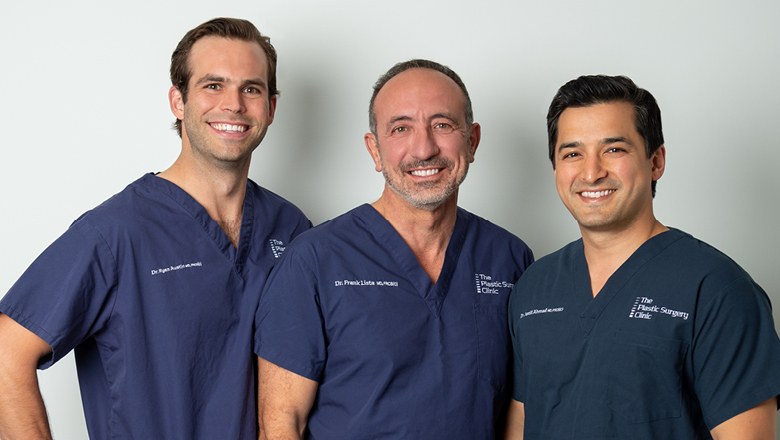
At the Plastic Surgery Clinic, our work extends well beyond consultations, operations, and non-surgical treatments. While patient care is at the heart of what we do, our surgeons also dedicate themselves to advancing the field through their affiliations with hospitals, universities, and, importantly, contributions to the scientific literature. Research and innovation are integral to our practice, ensuring that we continuously refine techniques and elevate the standard of care.
|
Aspect |
Conventional Textured Implants |
Nanotextured (“Functionally Smooth”) Implants |
Commentary by Our Surgeons |
|---|---|---|---|
|
Purpose |
Friction holds implant in place; reduced internal scarring |
Designed to mimic smoothness while retaining benefits of texture |
Surgical technique may influence complications more than implant design |
|
Concern |
Associated with rare lymphoma cases |
Higher complication rates reported in some studies |
Surgeons suggest patient-specific technique refinement is key |
|
Takeaway |
Reliable but carries risks |
Promising but requires careful adoption |
Emphasis on tailoring procedure to the patient |
Critical engagement is a cornerstone of scientific progress. In their joint paper “Commentary on: Transitioning From Conventional Textured to Nanotextured Breast Implants: Our Early Experience and Modifications for Optimal Breast Augmentation Outcomes,” Drs. Austin, Ahmad, and Lista offer a detailed critique of the original study.
The initial research examined the transition from traditional textured implants—once the standard due to their ability to remain stable with less internal scarring—to newer nanotextured implants, which are designed to mimic smoothness while minimizing risks associated with older textures. Some concerns were raised in the original paper about higher complication rates with nanotextured devices. Our surgeons responded by highlighting how surgical technique, rather than implant type alone, may influence outcomes. They argue that adapting surgical methods to the patient is key, emphasizing that innovation should not be dismissed prematurely.
|
Technique |
Traditional Approach |
Refined Approach |
Patient Benefit |
|---|---|---|---|
|
Nipple/Areola |
May be repositioned or detached |
Remains attached, preserving blood & nerve supply |
More natural sensation & appearance |
|
Tissue Removal |
Excision only |
Combination of liposuction + excision |
Smoother contour, reduced bulk |
|
Scarring |
Larger/more visible |
Scar placed discreetly |
Less conspicuous post-op |
|
Case Suitability |
Broad but less nuanced |
Selected cases where refinements apply |
More personalized outcomes |
Beyond critique, our team actively develops and shares new surgical refinements. In “Aesthetic Refinements in Male Chest Lifting,” the Plastic Surgery Clinic presents novel approaches that improve results for patients undergoing male chest lift procedures.
Key innovations include preserving nipple and areola attachment to maintain blood and nerve supply, combining liposuction with excision for more effective contouring, and creating less visible scarring.
The study highlights real-life case studies and provides practical guidance for surgeons worldwide. By publishing detailed methodology, our surgeons ensure that these techniques can be safely and effectively adopted by peers, underscoring the role of research in improving patient outcomes.
|
Aspect |
Preservation Rhinoplasty Focus |
Our Surgeon’s Commentary |
Key Consideration |
|---|---|---|---|
|
Goal |
Subtle, natural results with minimal structural removal |
Praised for natural outcomes |
Emphasizes case-by-case planning |
|
Techniques |
Three main refinements (bridge, septum, nostrils) |
Not all refinements apply universally |
Careful selection based on anatomy |
|
Long-Term Evaluation |
Limited data on aging effects |
Suggests factoring age-related changes |
Outcomes must be evaluated over time |
|
Contribution |
Expands knowledge of modern rhinoplasty |
Acknowledges limitations of study |
Encourages ongoing dialogue in research |
Scientific advancement is deeply collaborative. In “Commentary on: Decision Making in Preservation Rhinoplasty: A 100 Case Series With One-Year Follow-Up,” Dr. Ahmad evaluates a study on preservation rhinoplasty, a technique emphasizing subtle, natural refinements. While affirming the importance of minimal approaches, he also stresses the need to tailor techniques to individual patient concerns. A single rhinoplasty technique cannot meet every need; considerations vary depending on whether changes are needed to the bridge, septum, nostrils, or internal nasal structures.
Dr. Ahmad also notes the importance of long-term outcomes. Human anatomy evolves with age, which complicates assessment of surgical success. Recognizing these factors ensures that surgical decisions account for both immediate and future patient well-being.
Research is the foundation of modern medicine and a defining aspect of our practice. At the Plastic Surgery Clinic, we contribute to the academic conversation not only by refining techniques but also by questioning assumptions, sharing new approaches, and collaborating with peers across the globe. This integration of research and clinical practice ensures that our patients benefit from the latest advancements while upholding the highest standards of safety, ethics, and individualized care.

Did we answer all your questions? Our goal is to ensure you have the best information possible to make your decision. If you still have questions, we’re here to help.
 416.928.9494
 Email Us